Humanish, Justin Gregg suggests that it is somewhat taboo at hobby horse events to point out that participants are pretending.1
“the line between pretending and believing can be a bit fuzzy. At competitions, real equine veterinarians are present to help the girls check their horses for disease and make sure their vaccinations are up to date. […] For the girls who take competitive hobbyhorsing seriously, they don’t consider what they are doing as pretending at all. “If someone says we are playing, it strips away everything we made,” says Alisa Aarniomäki, one of the originators of hobbyhorsing and star of the documentary Hobbyhorse Revolution.”
Given all the effort, Gregg then asks the obvious question: do hobbyhorse enthusiasts really believe that their horses are real? Of course they do not. The second, more interesting question, however, is how participants collectively sustain a social reality in which treating them as real becomes and remains meaningful, perhaps even infront of an audience of parants who are less versed in the game.
Kayfabe
What Gregg is pointing to is a willful suspension of disbelief as a collective social contract, all for the sake of the game. An even more established arena for this contract, and the taboo of breaking it, is found in the (very) American World Wrestling Entertainment (WWE) business.
Popular in the 1990s, the striking part of WWE, a highly choreographed and elaborately costumed form of public wrestling, is how large crowds enthusiastically engage the performance as though the characters were really fighting, despite clearly acting. For onlookers, it’s not immediately clear if the crowd knows it’s theatre and not conflict.
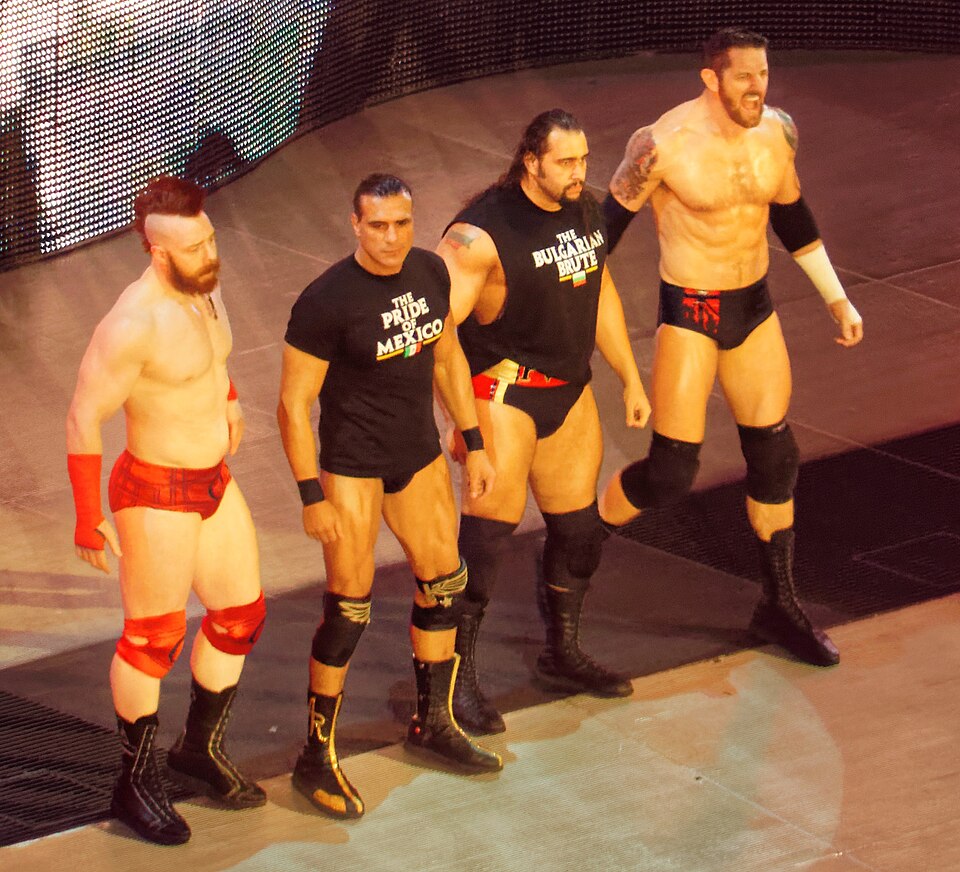
Figure 1: WWE Raw, 2016. Photo by Miguel Discart / CC BY-SA 2.0
But, like hobbyhorse riders, WWE fans are ‘in on the act’, willingly ignoring the fact that actors are play fighting for the sake of a good show. This practice of ignorance is so established that it has its own term, kayfabe, which refers to the code of secrecy wrestlers and fans abide by. Breaking the illusion of the show—“breaking kayfabe”—is taboo because it ruins the sport. Kayfabe also gives an active role to fans—rather than being passive observers at events, paying spectators are engaged participants and ‘play along’ with the theatrical narratives and character development.
Lacan
Kayfabe may be the clearest demonstration of Lacan’s tripartite framework of human experience. According to Lacan, kayfabe isn’t isolated to hobbyhorsing and WWE; it’s a deeply embedded tool used to perceive and engage with reality.
Firstly, there’s the Imaginary Order: the ideals and illusions that dictate our understanding and behavior. In hobbyhorsing and WWE, these are the ideals they strive to portray—the idealized discipline and grace of traditional equestrian sports, and the larger-than-life characters inside the ring. It is the Platonic ideal upon which the acts are all based.
To sustain these ideals, hobbyhorsers and WWE fans participate in what Lacan calls the Symbolic Order: the unspoken rules, language, and conventions of the game which - if respected - make the events sustainable and enjoyable. Sticks are horses, wrestlers do hate one another and really do fight with chairs.
Finally, and to many players’ lament, there is the Real: a traumatic rupture when participants are forced to confront something that cannot be integrated into the game. Perhaps a hobbyhorse snaps in the middle of a competition. Or a wrestler suffers a genuine injury during a scripted match. match. abruptly remind participants that the game rests upon a reality that cannot be fully controlled or symbolized. Kayfabe is therefore the custom of defending each other from the Real.
Lacan’s lasting observation is that we don’t just leave this behavior behind when we leave the wrestling arena or the hobbyhorse arena. We are always engaged in kayfabe, constantly relying on social norms to anchor ourselves in the Imaginary, collectively agreeing to overlook the disruptive flash of the Real whenever it threatens to break the illusion of everyday life.
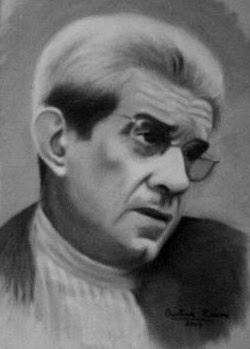
Figure 2: Drawing of Jacques Lacan. Artwork by Blatterhin / CC BY-SA 3.0.
As psychoanalysis, Lacan’s framework is an unfalsifiable pseudoscience. Like Freudian psychoanalysis, Lacanian theory has been criticized for its limited empirical grounding and disputed therapeutic effectiveness. Moreover, Lacan and his students have an unmistakable tendency to make intentionally convoluted arguments to obfuscate incoherency and to portray sophistication.
This notwithstanding, Lacan has also clearly left us with useful language for describing reoccuring features of human cognition and behavior, be it in hobbyhorse championships, boardroom meetings, or elections.
Gregg, J. (2025). Humanish: How anthropomorphism makes us smart, weird and delusional. Simon & Schuster. ↩︎